The Other Side of Midlife: On Power, Freedom, and Putting It All Down
This is the follow-up to my last post, One Year In: What Nobody Told Me About Moving Abroad. If you haven't read that one yet, it's worth starting there — it sets the stage for this one.
Last time I wrote to you, I shared the hard stuff. The exhaustion of immigrant life, the cognitive weight of perimenopause and a neurodivergent brain, the months of showing up quietly while trying to hold it all together. It was the most honest thing I've written in a while, and the response floored me — so many of you reached out to say me too, and that means more than I can express.
But here's the thing about telling the whole truth: it has more than one side. And spoiler alert: there’s good shit too!
Because alongside all of that hard — and I mean genuinely alongside it, not after it or in spite of it — something else has been happening. Something I didn't fully have words for until recently.
I am becoming the most authentically myself I have ever been since early childhood. And I don't think that's a coincidence.
What Other Cultures Already Know
In Japanese culture, menopause is referred to as konenki — a word that translates roughly to "renewal energy" or a "season of renewed life." It's understood not as a loss but as a transition into a more powerful stage of womanhood. In many Indigenous cultures, postmenopausal women are revered as wisdom keepers — the elders whose counsel is sought, whose experience is honored, whose presence anchors the community. In parts of South Asia and Africa, aging women are celebrated, not sidelined.
And then there's Western culture (insert side eye emoji), which has largely taught us that our value peaks in our twenties and thirties and quietly declines from there. That our worth is tied to our fertility, our appearance, our productivity, our ability to be pleasing and palatable to others.
But that’s bullshit. We've been lied to.
Because here is what those other cultures understand that ours largely doesn't: exiting our reproductive years is not a diminishment. It is a liberation.
For most of our lives, so much of our identity — consciously or not — has been shaped by our biology and by what society expects of women in relation to it. We are praised for our youth, our fertility, our nurturing, our availability. We are conditioned to derive our value from how well we serve others, how agreeable we are, how little space we take up. And somewhere along the way, many of us lost the thread of who we actually are underneath all of that.
When we exit our reproductive years, something shifts. The hormonal and biological forces that once kept us beholden to others — toward caretaking, toward approval-seeking, toward people-pleasing — begin to quiet. And in that quiet, something else gets louder: our own voice. Our own authority. Our own knowing.
This is what we have to reclaim. Not just our health or our energy — though those matter enormously — but our power. Our identity on our own terms. The freedom to stop performing a version of ourselves that was built for everyone else's comfort and finally, fully, become who we actually are. Many of us are doing this for the first time. And it is extraordinary.
There is another way to understand this transition — and I think the cultures who have always known this are onto something we desperately need to embrace.
The Community I Found on the Other Side of the Atlantic
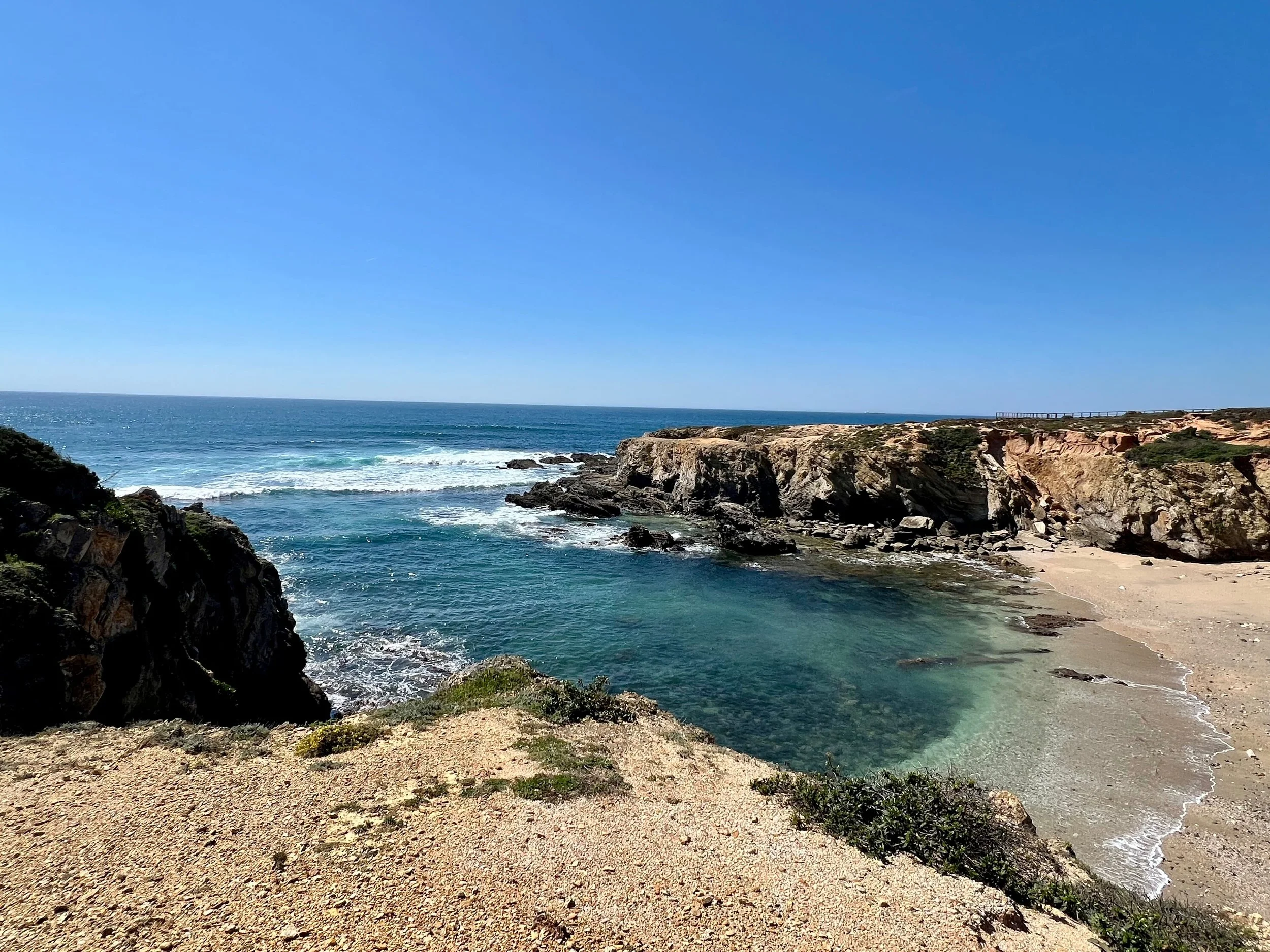
One of the unexpected gifts of moving to Portugal has been the women I've met here. Women who, like me, made a choice to pick up their lives and start over — to reinvent themselves in a new country, in a new chapter, on their own terms. Women in their forties, fifties, sixties, and even 70’s, building businesses, making art, forming friendships of a depth and authenticity that I don't think would have been possible for any of us earlier in our lives.
I have watched female entrepreneurs launch businesses and thrive here in ways that genuinely move me. Not in spite of their age — because of it. Because they have finally stopped asking for permission. Because they have lived enough life to know what actually matters. Because they have, one way or another, arrived at the liberating conclusion that other people's opinions of them are simply no longer their problem.
I have felt that shift in myself too. The one where you stop performing and start being. Where you stop shrinking yourself to make others comfortable and start taking up the space you were always meant to occupy.
It is not a small thing. And I don't think it happens accidentally. I think it happens when we finally get tired enough of carrying weight that was never ours to carry.
Putting Down What Was Never Yours
For most of our lives, women are handed a set of expectations — by society, by family, sometimes by ourselves — and told to carry them as if they belong to us. Be smaller. Be quieter. Be agreeable. Be available. Put everyone else first, take the leftovers and call it enough.
And most of us carried that weight dutifully, for decades, without even questioning whether we had to or not.
Midlife — perimenopause and beyond — has a way of making that weight unbearable. Not because we've gotten weaker, but because we're finally wise enough to set it down.
The shame that was never yours to hold. The limiting beliefs that had nothing to do with who you actually are or what you're actually capable of. The impossible expectations of perfection. The version of yourself you performed for an audience that may or may not have been paying attention anyway.
You can put it all down now. And when you do, what's left is real freedom.
I think of my dear friend who passed away last year — a childhood friend I had only just reconnected with the month before I moved to Portugal. We hadn't stayed in close touch for years, but the time we had together brought me right back to being twelve years old — the same innocent, goofy, unjaded little girls we once were, and also two women who had accumulated so much life since then. When I found out months later, through a Facebook post, that she was gone, it shook me in a way I didn't expect. Love you always KK! She was the first peer I have lost. And losing her changed something in me.
None of us has any guarantee of a long life. But if we are lucky enough to age — and I mean that sincerely, lucky — then I want us to do it fully. Loudly. Joyfully. Without apology.
You Are Worthy of Your Own Life
In my thirteen years of practicing nutrition, one of the most consistent patterns I've witnessed is this: it is genuinely hard to make meaningful changes — with food, with lifestyle, with self-care — when you don't really believe you're worth the effort.
And so many women don't. Not because they're weak or broken or beyond help. But because they've spent a lifetime receiving the message that everyone else comes first and they get the leftovers. They don’t want that for their daughters, but that’s what they’ve been modeling for them. The next generation of women are watching us and we have an opportunity to show them that it’s ok to prioritize our wellbeing and enjoyment of life.
For some of you, there’s an extra layer that you’re carrying. If you're in what we call “the sandwich generation” — caring for children still at home while also showing up for aging parents — I see you. You are being pulled in every direction by people who need you, and the idea of prioritizing yourself can feel not just selfish but genuinely impossible. I want to say this directly to you: you deserve care too. Not the leftovers, not whatever's left at the end of the day — real, intentional care. Please don't try to do this alone. Seek out community, whether that's a therapist, a support group, a circle of women who get it, or a practitioner who can help you support your body through this season. Being cared for is not a luxury. For you, right now, it is a necessity.
I know it's easier said than done to simply start believing you're worth being well cared for. So instead of fighting the critical internal voices head-on, try this: think about the people (and the animals!) who love and adore you most. Think about how they would describe you. What they see when they look at you. I promise you — I guarantee you — that the beauty they see goes so far beyond your looks, your productivity, or what you can do for them.
You are worthy and you are valuable and you are loved regardless of your appearance, your output, or your status in life. Your value lies in who you are, what is in your heart, and in the simple fact that you are a human being here on earth.
I want you to sit with that. Really sit with it.
And then I want you to consider the radical possibility that you deserve to feel good in your body. That you deserve to feel happy and fulfilled and genuinely excited about your life. That you deserve to feel seen, heard, and safe. That your life — your health, your joy, your becoming — is just as important as anyone else's.
Because it is. It always has been.
What's Coming
I am clearer than ever that this work — helping women feel their best during one of the most significant transitions of their lives — is exactly what I'm meant to be doing. And I'm working on some new ways to support more women through it, beyond just one-on-one sessions. I'm not quite ready to share the details yet, but I'm excited, and I think you will be too. Stay tuned. 🌊
In the meantime, if any of this resonates — if you're ready to start treating your own health and wellbeing as the priority it deserves to be — I would be truly honored to support you.
My free Coffee Talk is a 50-minute no-obligation conversation where we talk about where you are, what you're navigating, and what feeling your best actually looks like for you. There's no pressure, no pitch — just a real conversation between two women who understand that this season of life deserves real support.
Schedule your free Coffee Talk here.
You are not alone. You are not too late. And you are so, so worth it.
Sending love from Portugal. 🤍
— Jeannie
